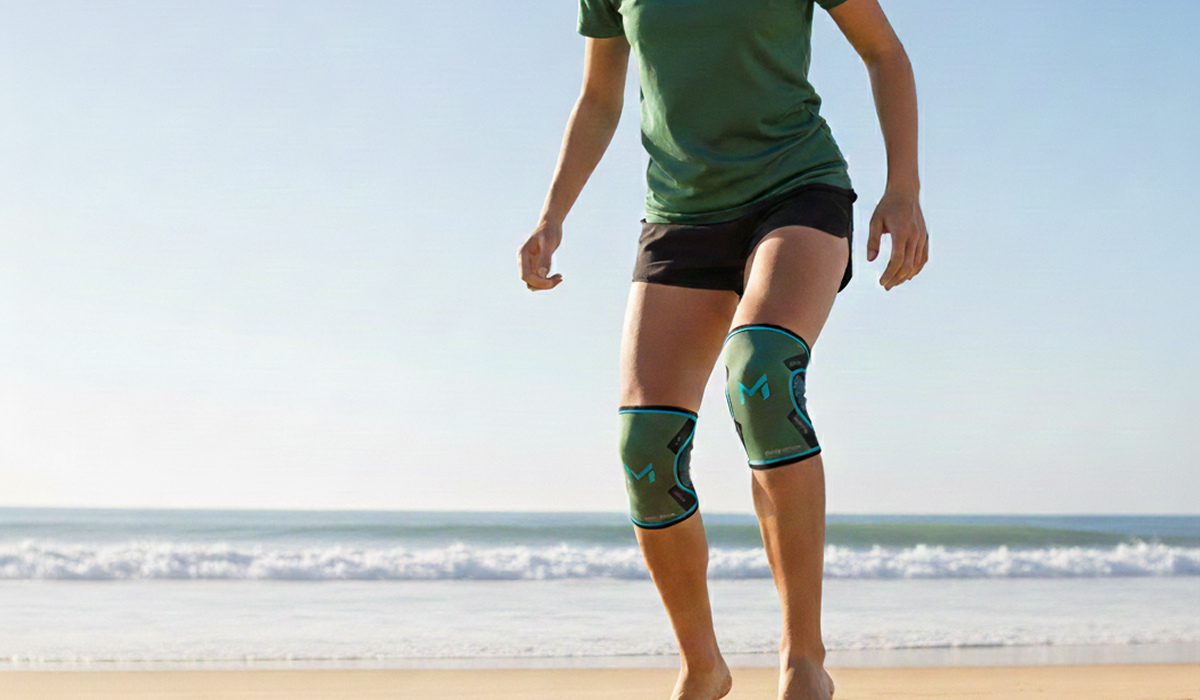
Motion Scout
Summary
Female youth soccer players (13-18) experience ACL injuries at 2-8x the rate of males due to body mechanics hormonal factors and knee anatomy. How might we use wearable technology to help youth athletes build correct landing patterns during team practice?
Project type
Industrial design
Role
Designer
Year
2026

Why am I interested in ACL Injuries?
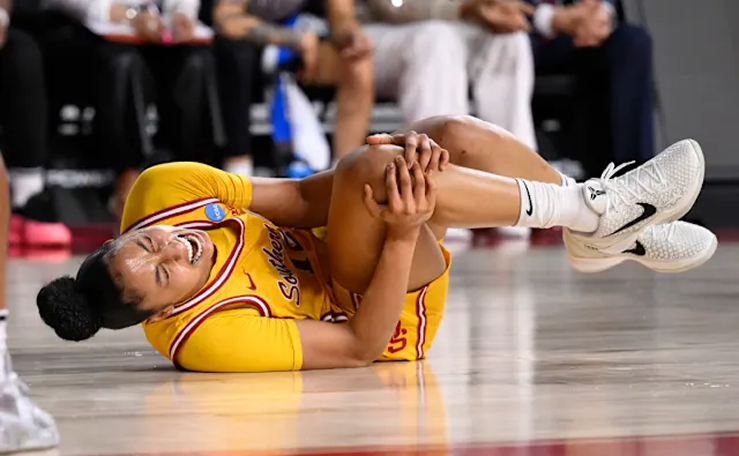
Juju Watkins, a young basketball phenom playing for the University of Southern California, was having a fantastic season and was likely to be drafted into the WNBA the following year. All of that changed when she suffered a torn ACL in her right knee during the NCAA Tournament in March 2025, forcing her to sit out the entire 2025-26 college basketball season to focus on recovery. It sent me into research mode to understand how ACL injuries occur, why female athletes are more susceptible to them, and how can they be prevented?
What is the ACL?
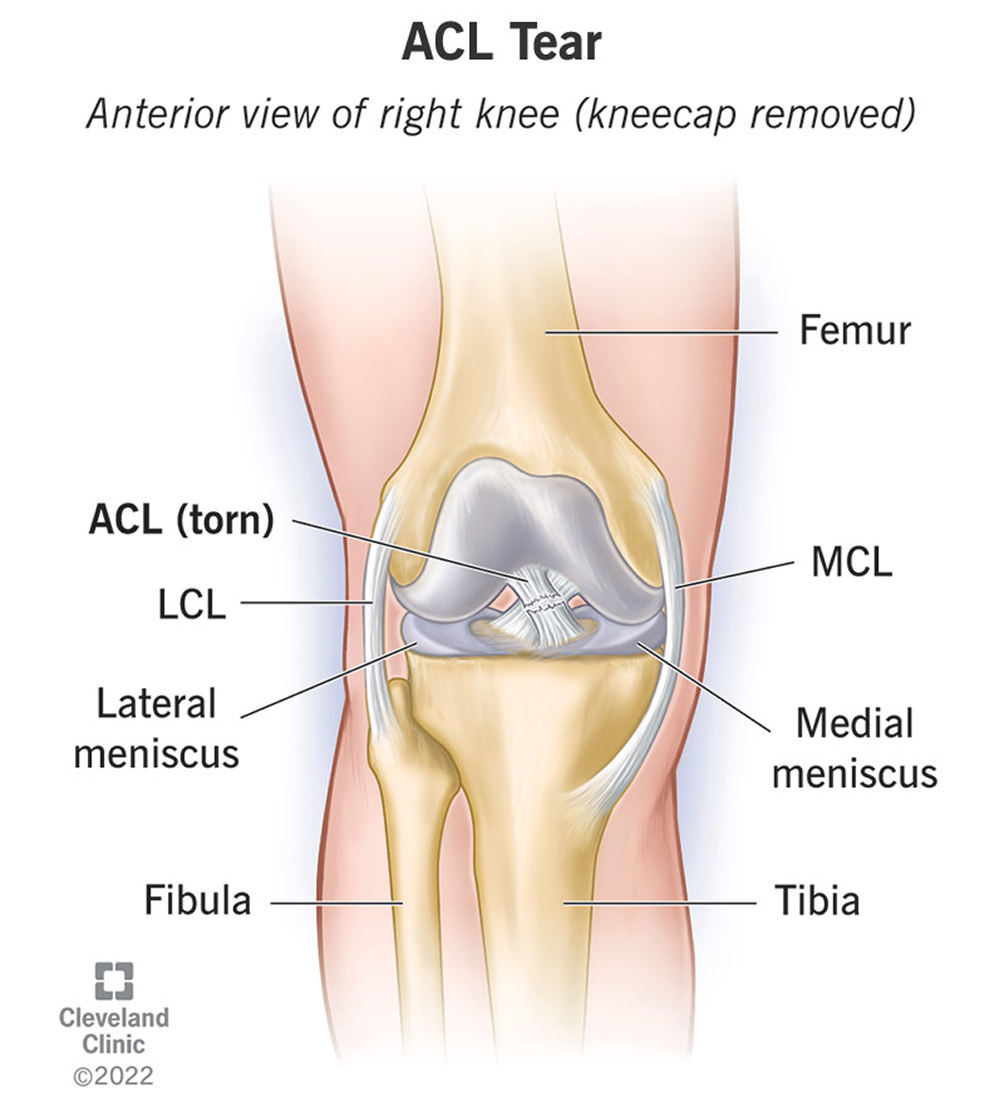
The ACL is a ligament in your knee that links your thigh bone (femur) to your shin bone (tibia). Each knee has one ACL, which forms an “X” shape with the posterior cruciate ligament (PCL). The ACL is located at the front of the knee, while the PCL is at the back. The ACL keeps your bones together and stops your knee from bending or twisting too much.
My approach
Due to my compressed timeline, I used Claude AI to assist with research source gathering, given that ACL prevention is a well-established research area with extensive peer-reviewed sources. I then reviewed the sources to verify findings and conduct thematic analysis through affinity mapping. My focus areas included:
- Sports medicine literature on ACL injury mechanisms in female athletes
- Analysis of existing prevention programs and their adoption rates
- Current wearable technology in sports injury prevention
Key Findings & Supporting Ideas
- The natural biomechanics of female athletes leads to differences in their training methods and timing.
- During landing, females consistently exhibit more of the knee collapsing inward while the hip rotates internally and the foot remains planted. Its the single most predictive bio-mechanical factor.
- The hormone relaxin, peaks during days 21-24 of the menstrual cycle creates elevated risks
- The female pelvis is wider, creating an average Q-angle of 18° compared to 13° in males—Athletes with Q-angles above 19° face significantly elevated ACL injury risk
- Current technology primarily targets the high-end market, leaving a gap in effective products for young female athletes.
- Force plates measure ground reaction forces and landing asymmetry ($10,000-$50,000)// The VERT wearable jump monitor ($125 + $100/year subscription) tracks jump height and count.
- Prevention is a crucial aspect of an athlete's journey, yet it often gets overlooked by both athletes and coaches.
- Evidence-based prevention programs exist that reduce ACL injuries by 50-88%, yet adoption remains dismally low because either coaches are not aware of it, or don’t want to spend the practice time on it.
- Implementation succeeds when involving athletes, coaches, athletic trainers, and strength staff in shared responsibility.
Ideation
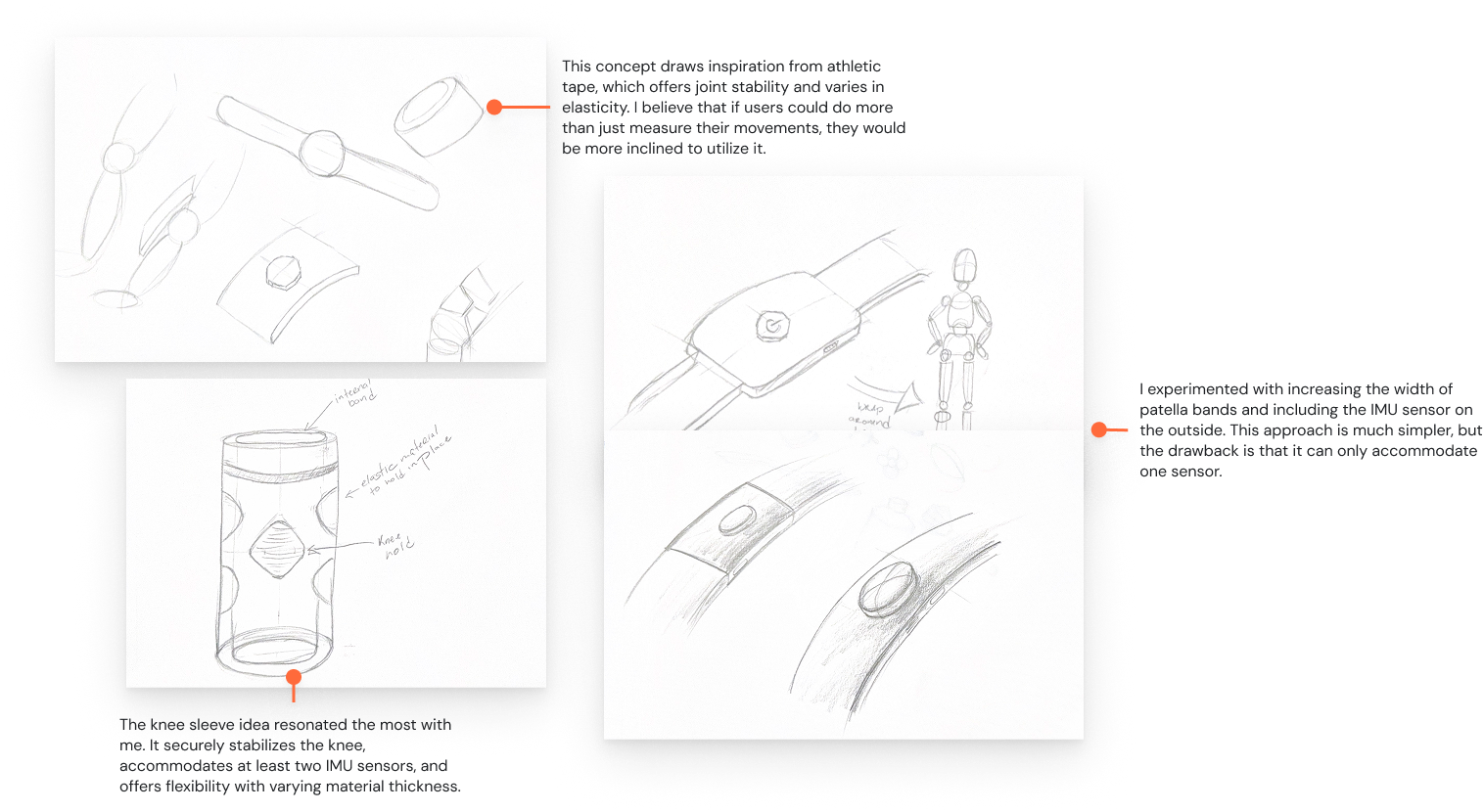
Wearable technology Ideation: My wearables brainstorm focuses on something that could comfortably fit above and below the knee to ensure precise measurements. I drew inspiration from current therapeutic athletic equipment.
Digital Ideation
Wearable technology Ideation: My wearables brainstorm focuses on something that could comfortably fit above and below the knee to ensure precise measurements. I drew inspiration from current therapeutic athletic equipment.
User interviews key themes
I interviewed two adult athletes (18-25) as proxies for minor participants due to timeline constraints. These interviews helped inform my design requirements and user scenario.
Real-time alerts vs Post-practice feedback
Both athletes felt that real-time alerts during practice or a game would be a distraction from the in-game focus required. One user described needing to track ball position and coordinate with teammates simultaneously. Adding feedback during that work would compromise her performance.
Athletes will not use a wearable that restricts movement
Ankle braces reduced the range of motion enough that one participant stopped using them despite spraining her ankle "once or twice." The protection-mobility tradeoff consistently favored performance.
Any wearable has to consider the sports regulations and equipment
Volleyball specifically prohibits all jewelry, watches, and hair accessories due to projectile risk when struck by balls traveling 50+ mph. Court shoes are heavier than regular footwear, making additional weight in footwear problematic.
Overuse detection for athletes would be a helpful indicator of future injury
One participant tore her patella doing "karate, volleyball, track and field...at the same time" in middle school. Another pulled her ACL crossing a street after accumulating micro-damage from training.
Design requirements
- Sweat/water resistant
- Secure attachment that doesn't restrict athletic movement
- Post workout daily & weekly injury risk progress, trends and movement recommendations
- Hip-knee-ankle alignment tracking
- USB-C charging capability
- Lightweight design (<100g total weight)
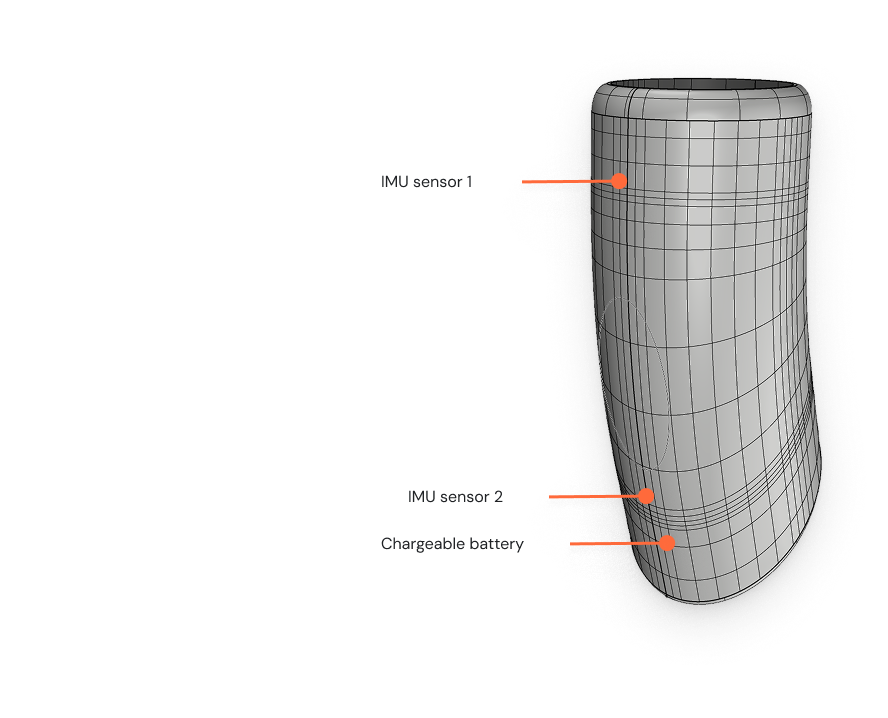
- IMU (Inertial Measurement Unit) combines accelerometers, gyroscopes, and magnetometers to measure an object's motion and orientation. It tracks acceleration, angular velocity, and magnetic fields to determine movement and calculate position. This two-sensor configuration has been validated in peer-reviewed research to accurately capture knee alignment and landing force distribution during cycling (Cordillet et al., 2019).
- Bioelectrical Impedance Analysis (BIA) measures resistance to estimate body composition metrics like muscle mass and body water percentage.
Final Prototype
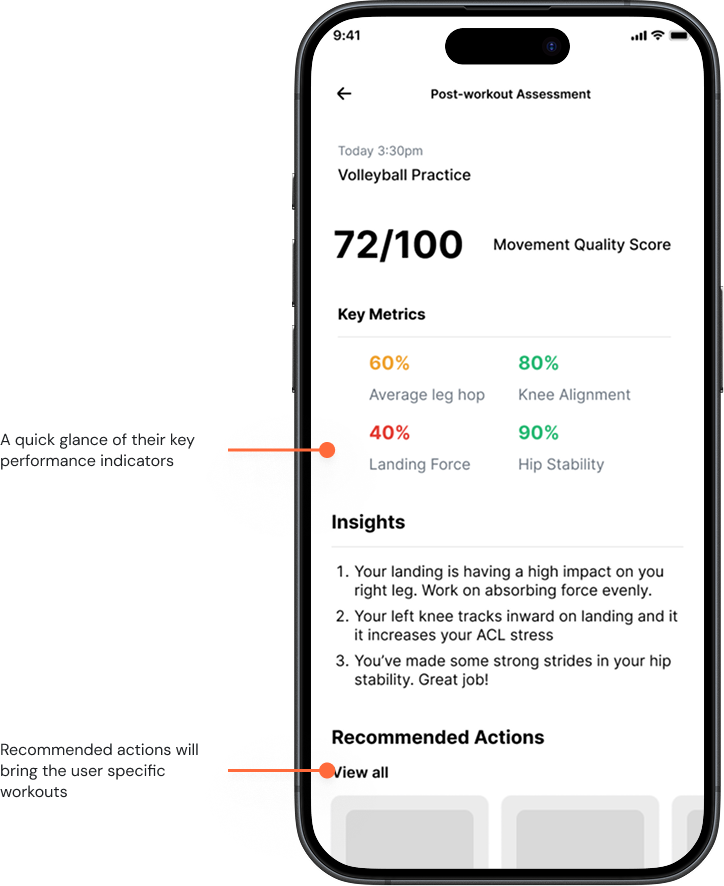
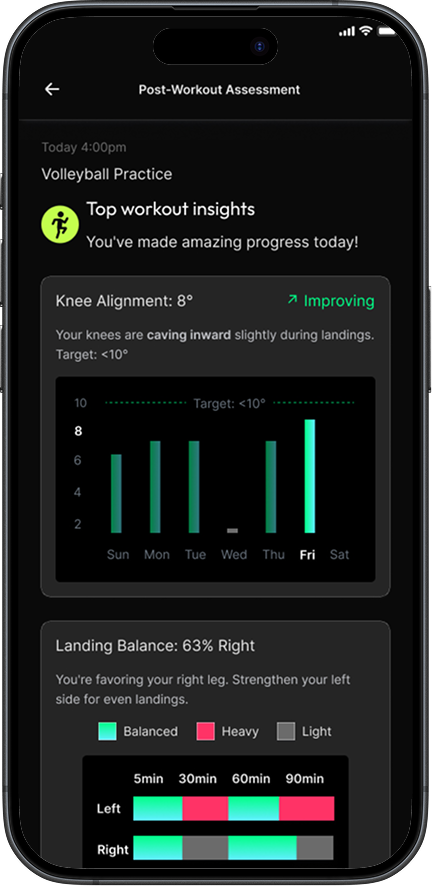
Based on my user interviews I found users would find real time haptic feedback to be distracting so I moved away from it and instead focused on post-practice feedback. I designed the CAD model and UI hero screen to pair with the wearable informing the user of valuable injury saving feedback.
Wearable knee sleeve
For the wearable, I moved forward with the concept of integrating the knee sleeve with the sensors focused on the knee alignment risk. The IMU sensors can measure an object's motion and orientation, making them an excellent tool for measuring an athlete's ACL risk indicators, including knee alignment and landing force distribution across both legs if two are worn.
Mobile hero screen
Imagine a young volleyball player, Charlene, finishes her practice after wearing the Motion Scout. She checks her phone to understand her progress, including her landing analysis, insights, and recommendations. This screen is all about giving her quick insights that inspire, but lead to actionable feedback preventing future injuries.


currently studying Industrial Design Engineering at TU Delft
Motion Scout
Summary
Female youth soccer players (13-18) experience ACL injuries at 2-8x the rate of males due to body mechanics hormonal factors and knee anatomy. How might we use wearable technology to help youth athletes build correct landing patterns during team practice?
Project type
Industrial design
Role
Designer
Year
2026

Why am I interested in ACL Injuries?
Juju Watkins, a young basketball phenom playing for the University of Southern California, was having a fantastic season and was likely to be drafted into the WNBA the following year. All of that changed when she suffered a torn ACL in her right knee during the NCAA Tournament in March 2025, forcing her to sit out the entire 2025-26 college basketball season to focus on recovery. It sent me into research mode to understand how ACL injuries occur, why female athletes are more susceptible to them, and how can they be prevented?
What is the ACL?
The ACL is a ligament in your knee that links your thigh bone (femur) to your shin bone (tibia). Each knee has one ACL, which forms an “X” shape with the posterior cruciate ligament (PCL). The ACL is located at the front of the knee, while the PCL is at the back. The ACL keeps your bones together and stops your knee from bending or twisting too much.
My approach
Due to my compressed timeline, I used Claude AI to assist with research source gathering, given that ACL prevention is a well-established research area with extensive peer-reviewed sources. I then reviewed the sources to verify findings and conduct thematic analysis through affinity mapping. My focus areas included:
- Sports medicine literature on ACL injury mechanisms in female athletes
- Analysis of existing prevention programs and their adoption rates
- Current wearable technology in sports injury prevention
Key Findings & Supporting Ideas
- The natural biomechanics of female athletes leads to differences in their training methods and timing.
- During landing, females consistently exhibit more of the knee collapsing inward while the hip rotates internally and the foot remains planted. Its the single most predictive bio-mechanical factor.
- The hormone relaxin, peaks during days 21-24 of the menstrual cycle creates elevated risks
- The female pelvis is wider, creating an average Q-angle of 18° compared to 13° in males—Athletes with Q-angles above 19° face significantly elevated ACL injury risk
- Current technology primarily targets the high-end market, leaving a gap in effective products for young female athletes.
- Force plates measure ground reaction forces and landing asymmetry ($10,000-$50,000)// The VERT wearable jump monitor ($125 + $100/year subscription) tracks jump height and count.
- Prevention is a crucial aspect of an athlete's journey, yet it often gets overlooked by both athletes and coaches.
- Evidence-based prevention programs exist that reduce ACL injuries by 50-88%, yet adoption remains dismally low because either coaches are not aware of it, or don’t want to spend the practice time on it.
- Implementation succeeds when involving athletes, coaches, athletic trainers, and strength staff in shared responsibility.
Ideation
Wearable technology Ideation: My wearables brainstorm focuses on something that could comfortably fit above and below the knee to ensure precise measurements. I drew inspiration from current therapeutic athletic equipment.
Digital Ideation
Wearable technology Ideation: My wearables brainstorm focuses on something that could comfortably fit above and below the knee to ensure precise measurements. I drew inspiration from current therapeutic athletic equipment.
User interviews key themes
I interviewed two adult athletes (18-25) as proxies for minor participants due to timeline constraints. These interviews helped inform my design requirements and user scenario.
Real-time alerts vs Post-practice feedback
Both athletes felt that real-time alerts during practice or a game would be a distraction from the in-game focus required. One user described needing to track ball position and coordinate with teammates simultaneously. Adding feedback during that work would compromise her performance.
Athletes will not use a wearable that restricts movement
Ankle braces reduced the range of motion enough that one participant stopped using them despite spraining her ankle "once or twice." The protection-mobility tradeoff consistently favored performance.
Any wearable has to consider the sports regulations and equipment
Volleyball specifically prohibits all jewelry, watches, and hair accessories due to projectile risk when struck by balls traveling 50+ mph. Court shoes are heavier than regular footwear, making additional weight in footwear problematic.
Overuse detection for athletes would be a helpful indicator of future injury
One participant tore her patella doing "karate, volleyball, track and field...at the same time" in middle school. Another pulled her ACL crossing a street after accumulating micro-damage from training.
Design requirements
- Sweat/water resistant
- Secure attachment that doesn't restrict athletic movement
- Post workout daily & weekly injury risk progress, trends and movement recommendations
- Hip-knee-ankle alignment tracking
- USB-C charging capability
- Lightweight design (<100g total weight)
- IMU (Inertial Measurement Unit) combines accelerometers, gyroscopes, and magnetometers to measure an object's motion and orientation. It tracks acceleration, angular velocity, and magnetic fields to determine movement and calculate position. This two-sensor configuration has been validated in peer-reviewed research to accurately capture knee alignment and landing force distribution during cycling (Cordillet et al., 2019).
- Bioelectrical Impedance Analysis (BIA) measures resistance to estimate body composition metrics like muscle mass and body water percentage.
Final Prototype
Based on my user interviews I found users would find real time haptic feedback to be distracting so I moved away from it and instead focused on post-practice feedback. I designed the CAD model and UI hero screen to pair with the wearable informing the user of valuable injury saving feedback.
Wearable knee sleeve
For the wearable, I moved forward with the concept of integrating the knee sleeve with the sensors focused on the knee alignment risk. The IMU sensors can measure an object's motion and orientation, making them an excellent tool for measuring an athlete's ACL risk indicators, including knee alignment and landing force distribution across both legs if two are worn.
Mobile hero screen
Imagine a young volleyball player, Charlene, finishes her practice after wearing the Motion Scout. She checks her phone to understand her progress, including her landing analysis, insights, and recommendations. This screen is all about giving her quick insights that inspire, but lead to actionable feedback preventing future injuries.
currently studying Industrial Design Engineering at TU Delft
Motion Scout
Summary
Female youth soccer players (13-18) experience ACL injuries at 2-8x the rate of males due to body mechanics hormonal factors and knee anatomy. How might we use wearable technology to help youth athletes build correct landing patterns during team practice?
Project type
Industrial design
Role
Designer
Year
2026

Why am I interested in ACL Injuries?
Juju Watkins, a young basketball phenom playing for the University of Southern California, was having a fantastic season and was likely to be drafted into the WNBA the following year. All of that changed when she suffered a torn ACL in her right knee during the NCAA Tournament in March 2025, forcing her to sit out the entire 2025-26 college basketball season to focus on recovery. It sent me into research mode to understand how ACL injuries occur, why female athletes are more susceptible to them, and how can they be prevented?
What is the ACL?
The ACL is a ligament in your knee that links your thigh bone (femur) to your shin bone (tibia). Each knee has one ACL, which forms an “X” shape with the posterior cruciate ligament (PCL). The ACL is located at the front of the knee, while the PCL is at the back. The ACL keeps your bones together and stops your knee from bending or twisting too much.
My approach
Due to my compressed timeline, I used Claude AI to assist with research source gathering, given that ACL prevention is a well-established research area with extensive peer-reviewed sources. I then reviewed the sources to verify findings and conduct thematic analysis through affinity mapping. My focus areas included:
- Sports medicine literature on ACL injury mechanisms in female athletes
- Analysis of existing prevention programs and their adoption rates
- Current wearable technology in sports injury prevention
Key Findings & Supporting Ideas
- The natural biomechanics of female athletes leads to differences in their training methods and timing.
- During landing, females consistently exhibit more of the knee collapsing inward while the hip rotates internally and the foot remains planted. Its the single most predictive bio-mechanical factor.
- The hormone relaxin, peaks during days 21-24 of the menstrual cycle creates elevated risks
- The female pelvis is wider, creating an average Q-angle of 18° compared to 13° in males—Athletes with Q-angles above 19° face significantly elevated ACL injury risk
- Current technology primarily targets the high-end market, leaving a gap in effective products for young female athletes.
- Force plates measure ground reaction forces and landing asymmetry ($10,000-$50,000)// The VERT wearable jump monitor ($125 + $100/year subscription) tracks jump height and count.
- Prevention is a crucial aspect of an athlete's journey, yet it often gets overlooked by both athletes and coaches.
- Evidence-based prevention programs exist that reduce ACL injuries by 50-88%, yet adoption remains dismally low because either coaches are not aware of it, or don’t want to spend the practice time on it.
- Implementation succeeds when involving athletes, coaches, athletic trainers, and strength staff in shared responsibility.
Ideation
Wearable technology Ideation: My wearables brainstorm focuses on something that could comfortably fit above and below the knee to ensure precise measurements. I drew inspiration from current therapeutic athletic equipment.
Digital Ideation
Wearable technology Ideation: My wearables brainstorm focuses on something that could comfortably fit above and below the knee to ensure precise measurements. I drew inspiration from current therapeutic athletic equipment.
User interviews key themes
I interviewed two adult athletes (18-25) as proxies for minor participants due to timeline constraints. These interviews helped inform my design requirements and user scenario.
Real-time alerts vs Post-practice feedback
Both athletes felt that real-time alerts during practice or a game would be a distraction from the in-game focus required. One user described needing to track ball position and coordinate with teammates simultaneously. Adding feedback during that work would compromise her performance.
Athletes will not use a wearable that restricts movement
Ankle braces reduced the range of motion enough that one participant stopped using them despite spraining her ankle "once or twice." The protection-mobility tradeoff consistently favored performance.
Any wearable has to consider the sports regulations and equipment
Volleyball specifically prohibits all jewelry, watches, and hair accessories due to projectile risk when struck by balls traveling 50+ mph. Court shoes are heavier than regular footwear, making additional weight in footwear problematic.
Overuse detection for athletes would be a helpful indicator of future injury
One participant tore her patella doing "karate, volleyball, track and field...at the same time" in middle school. Another pulled her ACL crossing a street after accumulating micro-damage from training.
Design requirements
- Sweat/water resistant
- Secure attachment that doesn't restrict athletic movement
- Post workout daily & weekly injury risk progress, trends and movement recommendations
- Hip-knee-ankle alignment tracking
- USB-C charging capability
- Lightweight design (<100g total weight)
- IMU (Inertial Measurement Unit) combines accelerometers, gyroscopes, and magnetometers to measure an object's motion and orientation. It tracks acceleration, angular velocity, and magnetic fields to determine movement and calculate position. This two-sensor configuration has been validated in peer-reviewed research to accurately capture knee alignment and landing force distribution during cycling (Cordillet et al., 2019).
- Bioelectrical Impedance Analysis (BIA) measures resistance to estimate body composition metrics like muscle mass and body water percentage.
Final Prototype
Based on my user interviews I found users would find real time haptic feedback to be distracting so I moved away from it and instead focused on post-practice feedback. I designed the CAD model and UI hero screen to pair with the wearable informing the user of valuable injury saving feedback.
Wearable knee sleeve
For the wearable, I moved forward with the concept of integrating the knee sleeve with the sensors focused on the knee alignment risk. The IMU sensors can measure an object's motion and orientation, making them an excellent tool for measuring an athlete's ACL risk indicators, including knee alignment and landing force distribution across both legs if two are worn.
Mobile hero screen
Imagine a young volleyball player, Charlene, finishes her practice after wearing the Motion Scout. She checks her phone to understand her progress, including her landing analysis, insights, and recommendations. This screen is all about giving her quick insights that inspire, but lead to actionable feedback preventing future injuries.
currently studying Industrial Design Engineering at TU Delft
Christina Campbell
Work
About
Contact
Motion Scout
Summary
Female youth soccer players (13-18) experience ACL injuries at 2-8x the rate of males due to body mechanics hormonal factors and knee anatomy. How might we use wearable technology to help youth athletes build correct landing patterns during team practice?
Project type
Industrial design
Role
Designer
Year
2026

Why am I interested in ACL Injuries?
Juju Watkins, a young basketball phenom playing for the University of Southern California, was having a fantastic season and was likely to be drafted into the WNBA the following year. All of that changed when she suffered a torn ACL in her right knee during the NCAA Tournament in March 2025, forcing her to sit out the entire 2025-26 college basketball season to focus on recovery. It sent me into research mode to understand how ACL injuries occur, why female athletes are more susceptible to them, and how can they be prevented?
What is the ACL?
The ACL is a ligament in your knee that links your thigh bone (femur) to your shin bone (tibia). Each knee has one ACL, which forms an “X” shape with the posterior cruciate ligament (PCL). The ACL is located at the front of the knee, while the PCL is at the back. The ACL keeps your bones together and stops your knee from bending or twisting too much.
My approach
Due to my compressed timeline, I used Claude AI to assist with research source gathering, given that ACL prevention is a well-established research area with extensive peer-reviewed sources. I then reviewed the sources to verify findings and conduct thematic analysis through affinity mapping. My focus areas included:
- Sports medicine literature on ACL injury mechanisms in female athletes
- Analysis of existing prevention programs and their adoption rates
- Current wearable technology in sports injury prevention
Key Findings & Supporting Ideas
- The natural biomechanics of female athletes leads to differences in their training methods and timing.
- During landing, females consistently exhibit more of the knee collapsing inward while the hip rotates internally and the foot remains planted. Its the single most predictive bio-mechanical factor.
- The hormone relaxin, peaks during days 21-24 of the menstrual cycle creates elevated risks
- The female pelvis is wider, creating an average Q-angle of 18° compared to 13° in males—Athletes with Q-angles above 19° face significantly elevated ACL injury risk
- Current technology primarily targets the high-end market, leaving a gap in effective products for young female athletes.
- Force plates measure ground reaction forces and landing asymmetry ($10,000-$50,000)// The VERT wearable jump monitor ($125 + $100/year subscription) tracks jump height and count.
- Prevention is a crucial aspect of an athlete's journey, yet it often gets overlooked by both athletes and coaches.
- Evidence-based prevention programs exist that reduce ACL injuries by 50-88%, yet adoption remains dismally low because either coaches are not aware of it, or don’t want to spend the practice time on it.
- Implementation succeeds when involving athletes, coaches, athletic trainers, and strength staff in shared responsibility.
Ideation
Wearable technology Ideation: My wearables brainstorm focuses on something that could comfortably fit above and below the knee to ensure precise measurements. I drew inspiration from current therapeutic athletic equipment.
Digital Ideation
Wearable technology Ideation: My wearables brainstorm focuses on something that could comfortably fit above and below the knee to ensure precise measurements. I drew inspiration from current therapeutic athletic equipment.
User interviews key themes
I interviewed two adult athletes (18-25) as proxies for minor participants due to timeline constraints. These interviews helped inform my design requirements and user scenario.
Real-time alerts vs Post-practice feedback
Both athletes felt that real-time alerts during practice or a game would be a distraction from the in-game focus required. One user described needing to track ball position and coordinate with teammates simultaneously. Adding feedback during that work would compromise her performance.
Athletes will not use a wearable that restricts movement
Ankle braces reduced the range of motion enough that one participant stopped using them despite spraining her ankle "once or twice." The protection-mobility tradeoff consistently favored performance.
Any wearable has to consider the sports regulations and equipment
Volleyball specifically prohibits all jewelry, watches, and hair accessories due to projectile risk when struck by balls traveling 50+ mph. Court shoes are heavier than regular footwear, making additional weight in footwear problematic.
Overuse detection for athletes would be a helpful indicator of future injury
One participant tore her patella doing "karate, volleyball, track and field...at the same time" in middle school. Another pulled her ACL crossing a street after accumulating micro-damage from training.
Design requirements
- Sweat/water resistant
- Secure attachment that doesn't restrict athletic movement
- Post workout daily & weekly injury risk progress, trends and movement recommendations
- Hip-knee-ankle alignment tracking
- USB-C charging capability
- Lightweight design (<100g total weight)
- IMU (Inertial Measurement Unit) combines accelerometers, gyroscopes, and magnetometers to measure an object's motion and orientation. It tracks acceleration, angular velocity, and magnetic fields to determine movement and calculate position. This two-sensor configuration has been validated in peer-reviewed research to accurately capture knee alignment and landing force distribution during cycling (Cordillet et al., 2019).
- Bioelectrical Impedance Analysis (BIA) measures resistance to estimate body composition metrics like muscle mass and body water percentage.
Final Prototype
Based on my user interviews I found users would find real time haptic feedback to be distracting so I moved away from it and instead focused on post-practice feedback. I designed the CAD model and UI hero screen to pair with the wearable informing the user of valuable injury saving feedback.
Wearable knee sleeve
For the wearable, I moved forward with the concept of integrating the knee sleeve with the sensors focused on the knee alignment risk. The IMU sensors can measure an object's motion and orientation, making them an excellent tool for measuring an athlete's ACL risk indicators, including knee alignment and landing force distribution across both legs if two are worn.
Mobile hero screen
Imagine a young volleyball player, Charlene, finishes her practice after wearing the Motion Scout. She checks her phone to understand her progress, including her landing analysis, insights, and recommendations. This screen is all about giving her quick insights that inspire, but lead to actionable feedback preventing future injuries.
currently studying Industrial Design Engineering at TU Delft
Christina Campbell
Work
About
Contact